





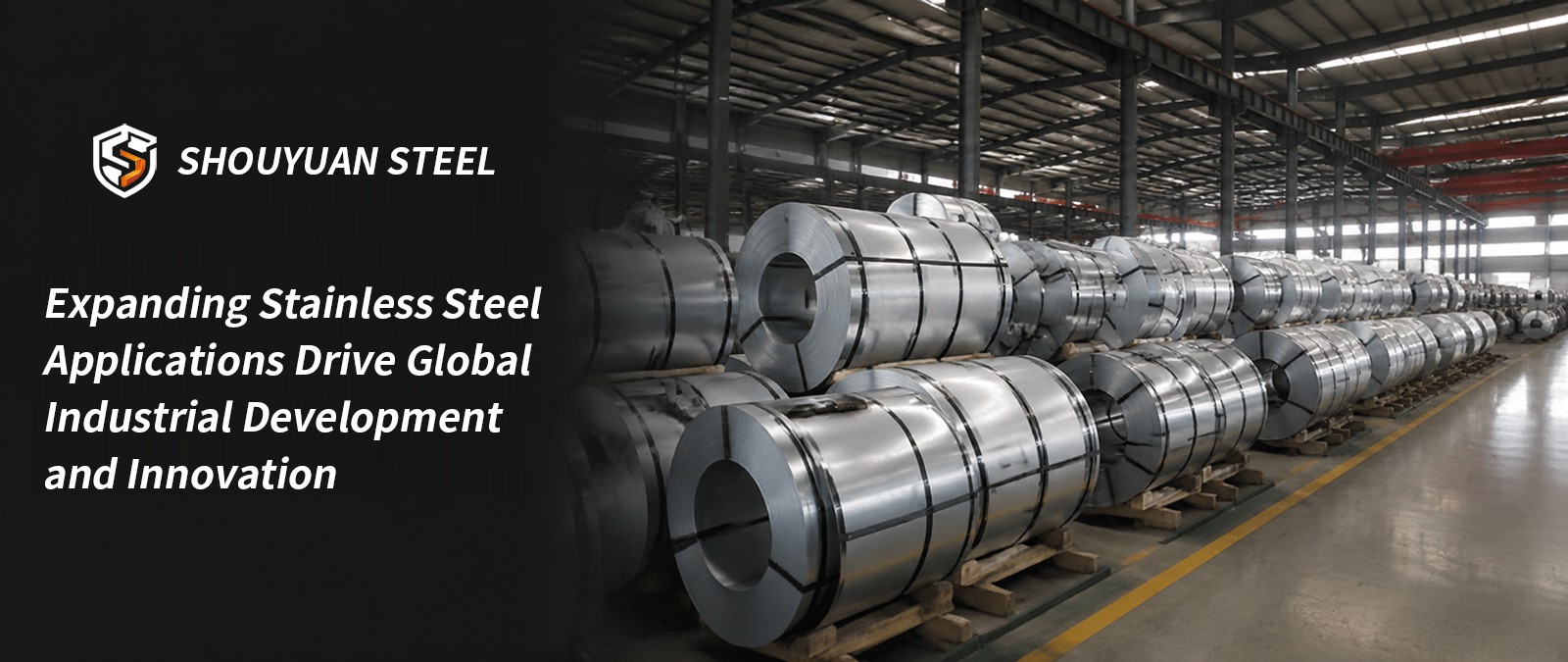
With continuous innovation in materials technology and the growing demand for sustainable industrial solutions, stainless steel has become one of the key engineering materials supporting global industrial development. Leveraging its excellent corrosion resistance, high strength, durability, recyclability, and multifunctionality, its applications are constantly expanding to high-end manufacturing, environmental protection, and public safety, achieving a comprehensive breakthrough from "flying into the sky to entering the ocean," while also driving the expansion of domestic stainless steel applications in the global market.
In the high-end manufacturing sector, technological breakthroughs in stainless steel are pushing application boundaries, injecting new vitality into cutting-edge industries. China's first stainless steel rocket super factory officially broke ground in Hangzhou, adopting a differentiated "stainless steel + liquid oxygen and methane" technology route. Relying on the high strength and high-temperature resistance of stainless steel, it achieves low-cost, recyclable rocket manufacturing. The first phase of the project is scheduled for completion by the end of 2026, with an annual production capacity of 30 rockets and a launch cost of less than RMB 25,000 per kilogram. It aims to promote innovation in manufacturing models within the aerospace industry.
With its superior strength-to-weight ratio, corrosion resistance, and high-temperature performance, stainless steel grades such as 304, 316L, and duplex stainless steel are widely used in aerospace equipment, chemical equipment, shipbuilding, and precision manufacturing industries.
In the aerospace and defense sectors, stainless steel materials such as 304 and 316L, due to their excellent corrosion resistance and strength-to-weight ratio, are widely used in aircraft exhaust systems, fuel pipelines, and naval equipment, becoming an economical and efficient alternative to titanium alloys and helping to reduce the manufacturing costs of high-end equipment. Furthermore, the 0.015mm ultra-thin "tearable steel" developed by Taiyuan Iron & Steel (TISCO) is widely used in high-end products such as OLED flexible screens and new energy battery tabs, providing a solid material foundation for high-precision manufacturing.
In the aerospace and high-end equipment manufacturing sectors, stainless steel, as an economical and efficient alternative material, is increasingly recognized as an ideal choice for traditional alloys. Its excellent mechanical properties and long service life help manufacturers improve product reliability while reducing maintenance costs.
Meanwhile, ultra-thin stainless steel materials have been applied in emerging industries such as flexible electronics, new energy batteries, and precision equipment manufacturing, further expanding the application prospects of stainless steel products.
In environmental applications, the weather resistance and reliability of stainless steel have been fully verified. A Nanjing-based company won a bid for an Arctic marine natural gas project. Its stainless steel ventilation pipes, resistant to ultra-low temperatures (-50℃) and strong salt spray corrosion, utilize a specially developed forming process and maintain a service life of over 20 years even in environments with year-round sea ice and high salinity and humidity, fully demonstrating the superior quality of domestically produced stainless steel under harsh conditions.
In the oil and gas sector, high-performance austenitic stainless steels, such as 316L and 904L, are widely used in high-pressure, high-temperature, and highly corrosive environments, including offshore platforms, subsea systems, and chemical plants. Examples include downhole pipes and subsea manifolds, designed to withstand high-temperature, high-pressure, and highly corrosive working environments. The global oil and gas industry accounts for over 30% of the world's high-end stainless steel consumption, becoming a core material support for the industry.
In the new energy sector, stainless steel helps achieve the "dual carbon" target. Photovoltaic power station supports utilize 304 and 316 stainless steel, ensuring stable operation for over 25 years. Meanwhile, cutting-edge fields such as hydrogen storage and transportation, and fusion energy rely on ultra-low temperature stainless steel to overcome technological bottlenecks and foreign monopolies. It is widely used in photovoltaic projects, hydrogen energy systems, energy storage facilities, and other green energy fields.
In the sectors of people's livelihood and basic industries, stainless steel is widely used, combining practicality and safety. In the construction industry, duplex stainless steel, with its high strength and corrosion resistance, has become an ideal material for high-end building curtain walls and roofs.
The applications of duplex stainless steel and high-strength stainless steel are increasingly widespread, covering: large bridges and transportation infrastructure, high-rise buildings and building structures, marine engineering projects, industrial plants, and public facilities.
The Hong Kong-Zhuhai-Macau Bridge used 9,000 tons of stainless steel reinforcement to resist marine corrosion; iconic buildings such as the Guangzhou Tower and the Sydney Opera House also utilize stainless steel, showcasing a perfect fusion of function and aesthetics.
In the food processing and medical fields, stainless steel is not only used as a food-grade material for kitchen utensils and processing equipment to ensure food safety, but also as a core material for medical devices such as scalpels and artificial joints, reducing the risk of hospital-acquired infections and protecting life and health. Stainless steel is highly favored for its excellent hygiene properties, ease of cleaning, corrosion resistance, and strong bactericidal ability. Stainless steel sheets, pipes, and precision components are widely used in food equipment, medical devices, pharmaceutical facilities, and hygiene systems.
In the automotive industry, 0.10-0.15mm ultra-thin embossed stainless steel is widely used in exhaust system heat shields, offering advantages such as high temperature resistance and lightweight construction. This helps reduce vehicle weight, lower fuel consumption, and improve corrosion resistance, and its application is gradually expanding to key components such as battery compartments in new energy vehicles. Lightweight stainless steel materials are increasingly used in exhaust systems, heat insulation components, and battery-related structures, contributing to improved vehicle durability, safety, and energy efficiency.
Global Demand Creates New Opportunities for Stainless Steel Suppliers
Driven by factors such as infrastructure upgrades, clean energy development, advanced manufacturing, and industrial transformation, global demand for high-quality stainless steel products continues to grow.
Customers worldwide are increasingly focusing on…
Get Bulk Order Discounts
Shouyuan Steel provides reliable steel and metal products at competitive prices. Contact us for bulk order discounts, customized solutions, and professional support.

