





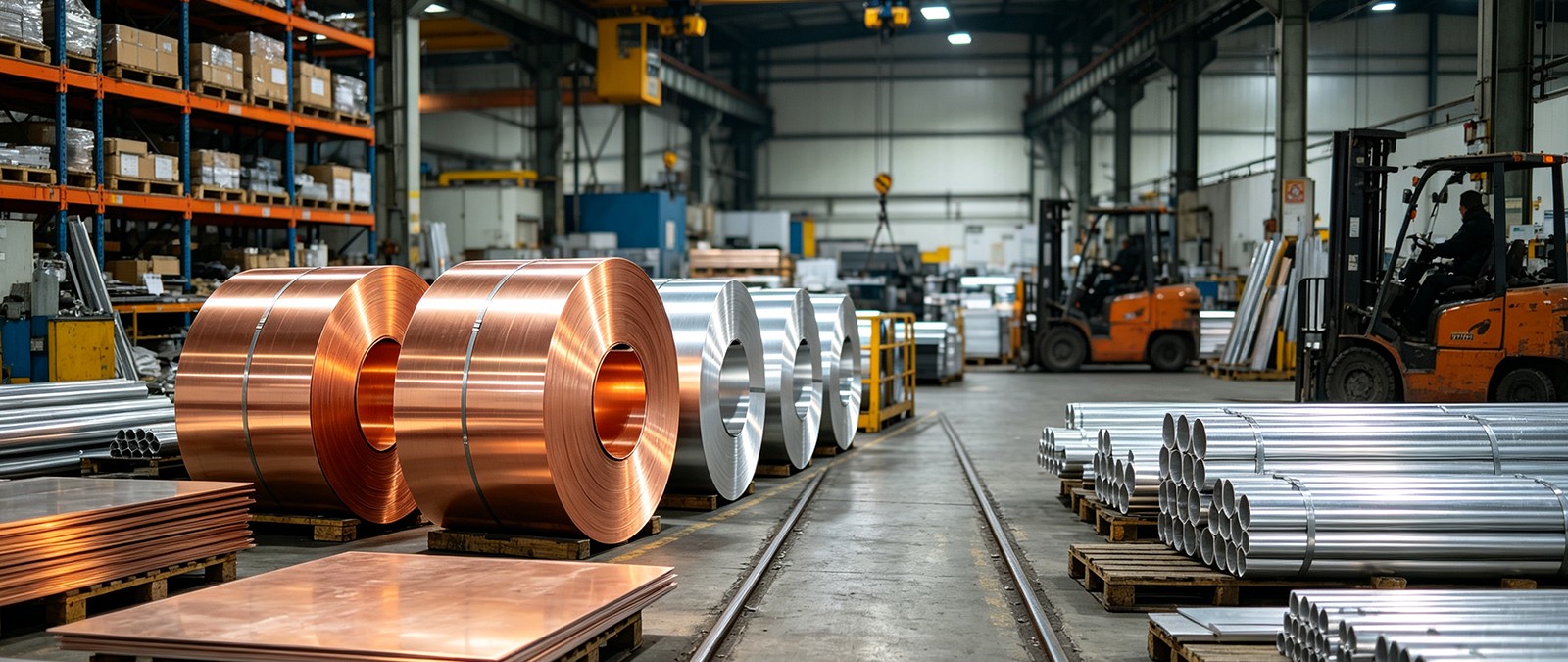
China's adjustment of its export tax rebate policy for some copper and aluminum products has become a focal point for international metal buyers, importers, distributors, and manufacturers.
Export tax rebates are a common tax measure in international trade, designed to encourage fair competition among exporting goods from different countries. According to WTO rules, export tax rebates comply with the principle of national treatment. On November 15, 2024, China's Ministry of Finance and State Taxation Administration announced that, effective December 1, 2024, export tax rebates would be cancelled for 34 tariff codes for copper products and 24 tariff codes for aluminum products. This includes certain copper plates, copper strips, copper wires, copper tubes, and copper alloys, as well as aluminum plates, aluminum strips, aluminum foil, aluminum tubes, aluminum profiles, and related products.
It is well known that companies can obtain partial tax rebates through export tax rebates, thereby reducing export costs and enhancing their competitiveness in the international market. This also helps stabilize companies' foreign exchange earnings and reduces the risk of export tax collection. Encouraging exports can drive the development of related domestic industries, promote employment, and boost economic growth. This policy is not merely a tax issue; it affects export pricing, supplier negotiations, CIF costs, procurement strategies, and procurement plans. So, against the backdrop of a global economic recession, what is the logic behind these measures? What impact will these measures have on the relevant parties? Today, we will explore these questions in depth.
Domestic Industrial Structure Optimization
This adjustment is widely seen as part of a broader initiative to optimize the industrial structure and encourage the development of high-value-added manufacturing and processing industries. This policy adjustment clearly reflects the country's profound thinking on industrial structure optimization. In recent years, my country's raw material exports have continued to grow, but this trade model is neither environmentally friendly nor economical, and often invites anti-dumping measures from relevant countries. Raw material exports mean high energy consumption and high pollution emissions, but the added value of the products is relatively low. By adjusting the export tax rebate policy, enterprises can be guided to develop towards the high end of the industrial chain. With the continuous growth of demand from the new energy industry, my country's aluminum and copper consumption gap will continue to widen. The official cancellation list only includes some copper and aluminum products, not all copper and aluminum export products. Canceling export tax rebates for aluminum and copper materials can both prioritize meeting domestic demand and encourage the export of high-value-added aluminum and copper materials.
Impact on Relevant Export Enterprises
For products covered by the newly removed list, exporters will no longer be able to rely on previous export tax rebates to offset some costs, meaning that the cost pressure on enterprises will increase significantly. Therefore, suppliers may need to adjust export quotations based on changes in production costs, processing costs, profit margins, logistics, and applicable taxes. However, this funding will no longer exist after the new policy is implemented.
Enterprises with lower technological levels, lower production efficiency, and weaker cost control capabilities will face greater survival pressure. Due to the difficulty in achieving profitability under their current models, these enterprises may need to adjust their production and sales arrangements in the future. With intensified competition, some backward enterprises will be eliminated, and the entire industry will enter a phase of accelerated reshuffling.
Therefore, this policy adjustment will help guide such industries towards deep processing and high value-added products, thereby promoting the industrial upgrading of the entire sector. Reducing the export of low value-added products will also help optimize the foreign trade structure.
Impact on the Global Market
China's aluminum exports reached 6 million tons in 2023 and 5.2 million tons in the first nine months of 2024, accounting for 13% and 15% of domestic electrolytic aluminum consumption, respectively. China's copper exports reached 700,000 tons in 2023 and 640,000 tons in the first nine months of 2024, accounting for only 4.6% and 5.8% of domestic copper consumption, respectively.
Data shows that copper exports account for a relatively small proportion, and China is a net importer of both copper and electrolytic copper; therefore, the impact on copper prices is expected to be relatively small. However, due to China's large share of aluminum exports and the high dependence of overseas markets on Chinese aluminum, the impact on aluminum prices will be greater.
With the cancellation of the export tax rebate policy, the 13% tax burden is expected to be mainly borne by overseas buyers. Domestic companies may pass on the costs to overseas markets by increasing processing fees or absolute prices. This move may, to some extent, suppress aluminum exports and promote aluminum product exports.
However, the cancellation of export tax rebates will not affect the overall global supply and demand relationship, nor will it have a fundamental impact on long-term prices. The absolute prices of copper and aluminum are determined by global supply and demand; the export tax rebate policy only affects the procurement costs of overseas users. After the market reaches equilibrium, the absolute price level will still be determined by the global supply and demand pattern.
What should companies do?
The adjustment of China's export tax rebate policy highlights a significant trend in global metal sourcing: purchasing decisions are increasingly influenced by product quality and trade policies.
For companies that regularly import copper or aluminum products from China, re-evaluating their sourcing strategies and assessing different product forms can be highly beneficial.
Due to the policy adjustment, both the export costs of copper and aluminum raw materials and the prices of export orders have increased, directly reducing export profits and pushing up the loss rate of foreign trade orders.
Therefore, companies must proactively negotiate and communicate with overseas customers to explore how to share the increased costs caused by the cancellation of tax rebates. Secondly, companies must actively adjust their business strategies and proactively transform their export methods. For example, copper processing companies should ideally adjust their product export methods, using their own raw material processing or imported raw material processing to stabilize the copper product export market.
Does your next order require a reliable metal supplier?
Whether you need to procure steel, aluminum, copper, steel coils, steel plates, or industrial pipes, Shandong Shouyuan Steel Co., Ltd. is committed to providing customers with reliable metal and steel sourcing solutions. Our team can help you evaluate suitable products and develop sourcing plans based on your required specifications, quantities, applications, and target markets.
Please contact Shandong Shouyuan Steel Co., Ltd. for product specifications and competitive quotations.
Get Bulk Order Discounts
Shouyuan Steel provides reliable steel and metal products at competitive prices. Contact us for bulk order discounts, customized solutions, and professional support.

